


The Family That Meets Once a Year: Inside the Wheelchair Games’ Enduring Bonds
Veterans return to the National Veterans Wheelchair Games year after year, and the reason rarely has anything to do with medals. It’s the reunion. Teammates who become family. Competitors from a decade ago who now text each other year-round. Rivals on the court who stay connected long after closing ceremonies.
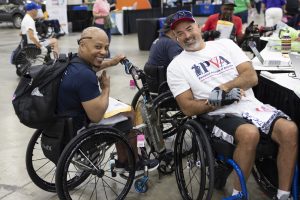 Milas Wyatt, a Marine Corps veteran from North Carolina, described the event as a homecoming. Wyatt should know. He’s been to 13 Wheelchair Games.
“When we are here, all of us are the same. We’re all in chairs and we connect. We’re here to have a good time and we understand each other without knowing each other. I fit in with all the people here,” he said.
That sense of belonging isn’t confined to the athletes. Coaches, VA staff, family members, caregivers, and an army of volunteers move through the Athlete Village and competition venues all week, many of them repeat volunteers who’ve built their own friendships with the athletes they support.
Harold Taylor, an Air Force veteran who first attended the Wheelchair Games in 2008, took a number of years off due to health problems. This year’s event was his first in a long time, and the camaraderie was a major reason he came back.
“We’ve always been trained to watch out for each other and care for each other,” he said. “That hasn’t changed. The camaraderie between young people and older people is awesome to see.”
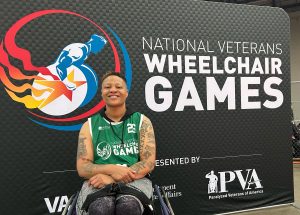
Le’Toi Adams, an Army veteran with an infectious smile, shared her first Wheelchair Games experience.
“Utah, 2016. I saw about 500 veterans in wheelchairs, and they were happy, they were talking, and they were enjoying life. And we were playing sports for a week, and it was awesome. It was amazing feeling,” she said. “It inspired me. It makes me emotional just thinking about it right now. … I make it a point to be here every single year to see all these wonderful faces.”
A walk through the Athlete Village at any hour of the day and it doesn’t take long to notice that this doesn’t look like a sporting event so much as a family reunion that happens to have a scoreboard.
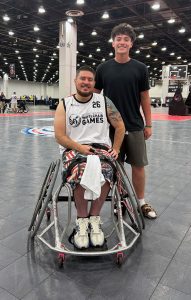 Julian Lind, 16, has been coming to the Wheelchair Games since he was 4. He’s not a veteran, doesn’t use a wheelchair, and doesn’t compete in any events, but he still forms bonds with athletes who’ve become unofficial aunts and uncles over the years.
“This year, I might have been more excited for the Games than my father,” Julian said. His father, Jesse, received the 2025 Spirit of the Games Award, a peer-nominated honor that recognizes a single athlete who exemplifies exceptional drive, commitment, and sportsmanship.
“I just love seeing the competition. Even when the world knocks these athletes down, they come through with compassion and it’s always really impressive to watch,” Julian said. “I love [coming here] and seeing the people I love. I consider almost all these people family, and it’s always great to see them for a week each year.”
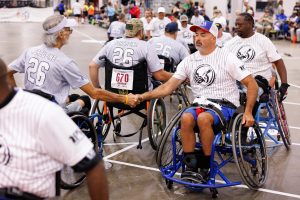 Lee Sexton, an Army veteran from southwest Virginia who attended his first Wheelchair Games in 1994, punctuated what many others said during the week.
“This isn’t an annual event. It’s a family reunion. That keeps me motivated to come back every year for the brotherhood, the sisterhood, the camaraderie.”
For 45 years, the Wheelchair Games have proven that the finish line isn’t really the point. The point is everyone who crosses it together.
Want to help make these lifelong connections possible? Explore volunteer opportunities for the 2027 Wheelchair Games.